
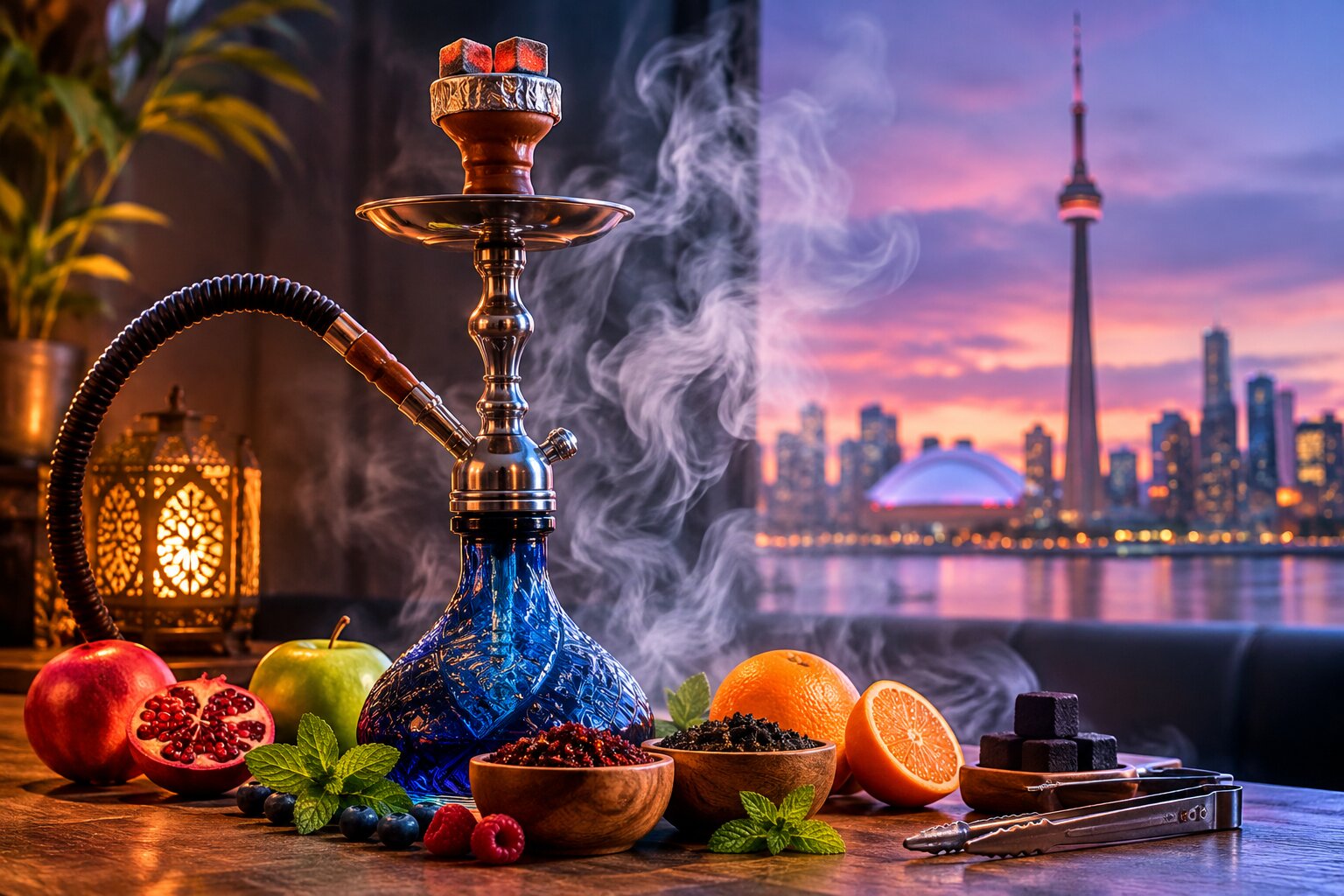
Shisha Canada is a topic that brings together a variety of products, traditions, terminology, and regulations that consumers should understand before exploring the Canadian shisha market. From traditional waterpipes and flavoured mixtures to tobacco-free alternatives and modern hookah accessories, the subject involves more than simply choosing a flavour.
At Shisha Shop, we recognize that understanding the products, ingredients, terminology, and regulations surrounding shisha is important for anyone researching this category. Canada’s market includes different types of waterpipe products, and not every product described as shisha has the same ingredients or regulatory classification.
Whether you are researching traditional shisha, learning about hookah flavours, or trying to understand the difference between tobacco-containing and tobacco-free mixtures, having accurate information makes it easier to distinguish between product categories and understand the wider industry.
In this guide, we explore the meaning of shisha, the different product classifications, the relationship between shisha and hookah, Canadian regulations, and important health considerations.
What Is Shisha? Understanding the Basics
Shisha is a term commonly associated with flavoured mixtures used in waterpipes, also known as hookahs. Traditionally, tobacco-containing shisha consists of tobacco combined with ingredients such as molasses, glycerin, and flavouring substances.
The mixture is placed in a bowl at the top of a waterpipe. Heat, commonly supplied by charcoal, produces an aerosol that travels through the waterpipe before being inhaled.
Although waterpipes are often associated with social and cultural traditions in different parts of the world, the terminology can vary between communities and regions.
It is useful to understand three related terms:
- Shisha: Commonly refers to the flavoured mixture used in a waterpipe, although the term can also refer to the waterpipe itself in some regions.
- Hookah: Refers to the waterpipe apparatus used to produce and deliver the inhaled aerosol.
- Waterpipe: A general term describing the device through which smoke or aerosol passes before inhalation.
Understanding these distinctions helps consumers interpret product descriptions and recognize what a retailer means when using terms such as shisha, hookah, or waterpipe.
The Shisha Canada Market
The Canadian shisha market includes different product categories, equipment, accessories, and terminology. However, products that appear similar in packaging or presentation can have significantly different ingredients.
One of the most important distinctions is whether a mixture contains tobacco.
Tobacco-containing shisha
Traditional shisha mixtures commonly contain tobacco. Tobacco naturally contains nicotine, an addictive substance.
Other ingredients may include glycerin, flavouring compounds, and sweetening ingredients. The precise formulation varies by manufacturer and product.
Tobacco-containing shisha is subject to Canadian federal and applicable provincial or territorial tobacco laws. Its marketing, sale, packaging, labelling, and distribution must comply with the relevant requirements.
Tobacco-free herbal mixtures
Some waterpipe mixtures are marketed as herbal or tobacco-free alternatives.
These products do not necessarily contain tobacco, but their ingredients and regulatory classification must be assessed individually.
An important point is that tobacco-free does not automatically mean nicotine-free, harmless, or safe to inhale. Ingredients, heating methods, and combustion can all influence exposure.
Consumers should examine product information carefully rather than assuming that all products described as herbal have identical characteristics.
Shisha and Hookah: Are They the Same Thing?
The terms shisha and hookah are frequently used together, but they do not always describe the same thing.
Hookah generally refers to the waterpipe device, while shisha commonly refers to the mixture used inside its bowl.
A traditional waterpipe includes several components:
| Component | General function |
| Bowl | Holds the shisha mixture |
| Stem | Connects the upper and lower sections |
| Water base | Holds the water through which the aerosol passes |
| Hose | Provides a passage for inhalation |
| Mouthpiece | The part used by the individual |
| Heat source | Supplies heat to the mixture |
These components work together to create the traditional waterpipe configuration.
The water in the base does not eliminate the health risks associated with inhaling tobacco smoke or other substances produced during heating.
Different Shisha Flavour Categories
Flavour terminology is an important part of understanding the shisha industry. Product descriptions often refer to individual flavour profiles, combinations, and aromatic characteristics.
However, flavour names alone do not establish a product’s ingredients, nicotine content, or regulatory classification.
When researching shisha flavours in Canada, it is useful to understand the terminology used in product descriptions and distinguish between flavour characteristics and actual product composition.
Single-flavour descriptions
A single-flavour description identifies a particular flavour profile rather than a combination of several profiles.
Such descriptions may refer to fruit, mint, floral, or other aromatic categories. The exact formulation depends on the manufacturer.
Mixed-flavour descriptions
Some products are described using combinations of flavour profiles.
A mixed description does not necessarily reveal the proportions of individual ingredients or the precise composition of the mixture.
Why product ingredients matter
Consumers should not rely exclusively on attractive product names or flavour descriptions.
Important information includes:
- Whether the product contains tobacco.
- Whether nicotine is present.
- The ingredients declared by the manufacturer.
- Applicable product warnings.
- Regulatory classification.
- Manufacturer and packaging information.
This is especially important in Canada, where different product categories can be governed by different federal and provincial requirements.
How to Evaluate Shisha Product Information Responsibly
When researching the Canadian shisha market, consumers should look beyond product names and descriptions.
A useful way to evaluate product information is to consider several factors.
1. Product classification
Determine whether the product contains tobacco, nicotine, or neither. Do not assume that a herbal description establishes the complete composition.
2. Manufacturer information
Look for identifiable manufacturer details and accurate product documentation.
3. Packaging and labelling
Check that applicable Canadian packaging and warning requirements are addressed.
4. Ingredient transparency
Review available ingredient information and avoid making assumptions based on flavour names.
5. Applicable regulations
Consider the federal, provincial, and territorial rules governing the specific product category.
This approach helps readers distinguish factual product information from general marketing terminology.
Frequently Asked Questions About Shisha Canada
What does shisha mean in Canada?
Shisha commonly refers to a flavoured mixture used in a waterpipe, although the term can also refer to the waterpipe itself in some cultural contexts.
Is shisha the same as hookah?
Not exactly. Hookah generally refers to the waterpipe apparatus, while shisha usually refers to the mixture placed inside it.
Does all shisha contain tobacco?
No. Traditional shisha commonly contains tobacco, while some products are marketed as tobacco-free herbal mixtures. Their ingredients and regulatory classification should be checked individually.
Does tobacco-free shisha mean nicotine-free?
Not necessarily. Tobacco-free and nicotine-free are different product descriptions. Consumers should verify the manufacturer’s ingredient and nicotine information.
Is hookah smoking safer because the smoke passes through water?
No. Water filtration does not eliminate the health risks associated with inhaling waterpipe smoke. Hookah use can expose individuals to nicotine, carbon monoxide, and other harmful substances.
Is shisha legal in Canada?
Tobacco-containing shisha is subject to Canadian tobacco legislation and applicable provincial and territorial requirements. Product classification, retail sales, age restrictions, and advertising rules all matter.
What is the difference between traditional shisha and herbal shisha?
Traditional shisha commonly contains tobacco, while herbal shisha is generally marketed as a tobacco-free mixture. However, the precise ingredients and regulatory status depend on the individual product.
What should consumers check when researching shisha products?
Consumers should examine product ingredients, tobacco and nicotine information, manufacturer details, packaging, health warnings, and applicable Canadian regulations.
Final Thoughts
The Canadian shisha market includes a range of waterpipe products, terminology, accessories, and product classifications. Understanding these differences is essential when researching the industry.
At Shisha Shop, we believe accurate product information and a clear understanding of the Canadian regulatory environment are important parts of discussing the shisha category responsibly.
Whether the subject is traditional tobacco-containing shisha, tobacco-free herbal mixtures, hookah equipment, or the terminology used throughout the industry, consumers benefit from reliable information rather than assumptions based on product names alone.
The most important takeaway is simple: understand what a product contains, distinguish between tobacco-containing and tobacco-free categories, and consider the applicable Canadian regulations and health information before making decisions.
Disclaimer: This article is intended for general educational purposes. It is not medical or legal advice. Canadian legislation and provincial or territorial requirements may change. Readers and businesses should consult current official government guidance and qualified professionals for advice concerning specific products or activities.